Most planning decisions don’t fall apart because of design or policy. They fall apart because nobody is convinced the surrounding network can cope.
That is where transport modelling comes in. Not as a technical exercise, but as the point where a development is translated into real movement. Who is travelling, where they are going, how they get there, and what happens when those trips reach the network.
At the centre of that sits trip distribution. Get that wrong, and everything that follows starts to unravel.
Trip distribution is where the story starts
Trip generation tells you how many trips a development might create. Trip distribution takes that a step further and shows where those trips are actually going.
That distinction matters more than most people expect. Two schemes can generate the same number of trips and still have completely different impacts depending on how those trips spread across the network. If the majority of traffic is drawn towards one already constrained junction, that becomes the pressure point. If those trips disperse across several routes, the impact may be barely noticeable.
Trip distribution is built using a combination of local data, census travel patterns, observed traffic flows and professional judgement. It should reflect how people actually move through an area, not just what looks neat in a model.
If it does not feel grounded in reality, it will be challenged. And once distribution is questioned, the credibility of the wider transport case usually follows.
From distribution to assignment, where trips actually land
Once trips have been distributed, they need to be assigned to specific routes.
This is where modelling moves out of abstraction and into something tangible. The exercise shifts from percentages to vehicles on real roads, at real times of day, interacting with existing conditions.
Route choice is influenced by how the network actually operates. Drivers respond to congestion, delays, signal timings and familiarity. If a model ignores those behaviours, it can end up sending traffic along routes that make sense on paper but do not reflect how people drive in practice.
That disconnect is often picked up quickly during review and can undermine confidence in the assessment.
Junction capacity is where decisions are made
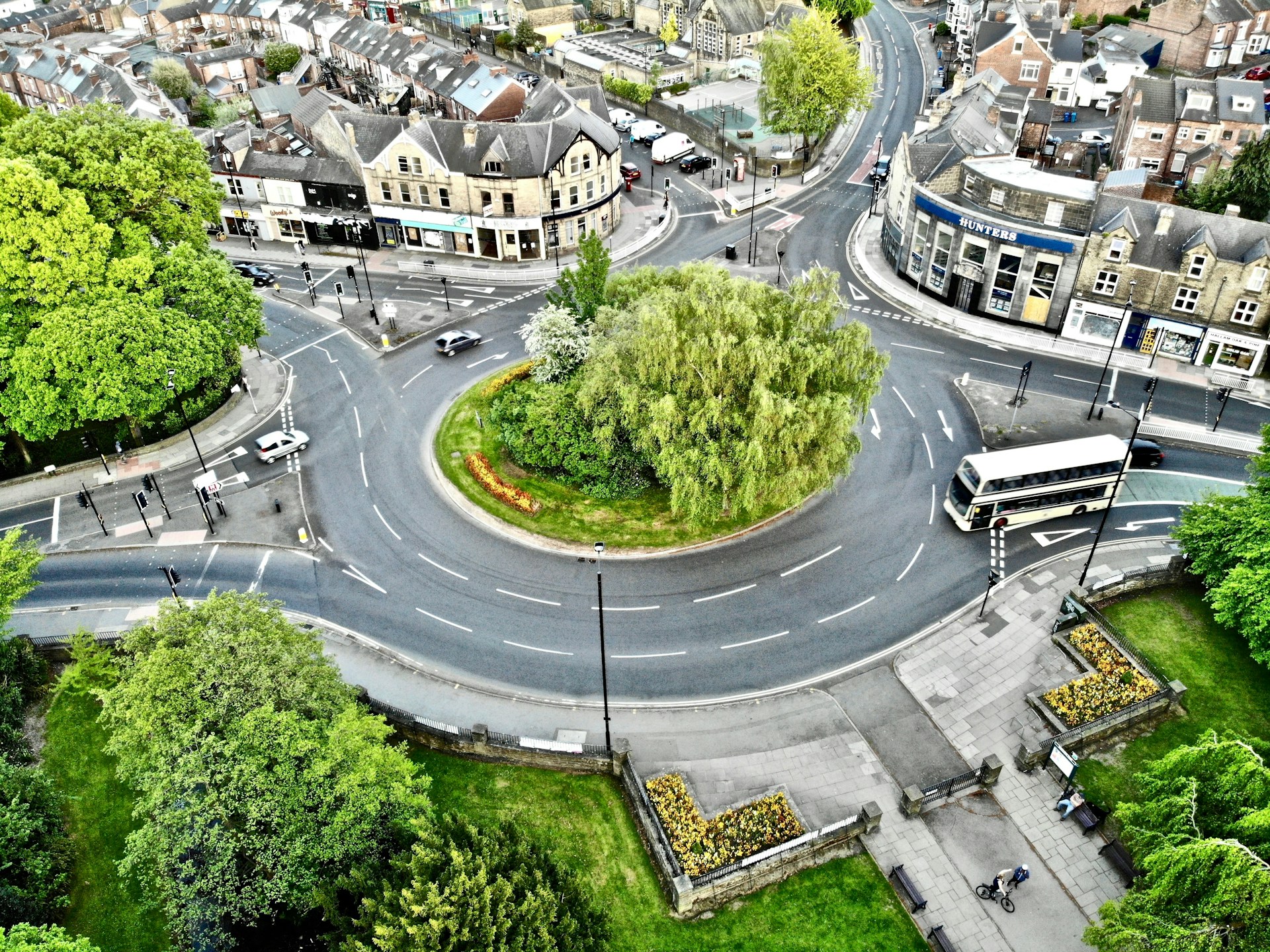
Planning decisions often hinge on a small number of junctions rather than the network as a whole.
Even if the wider area appears to function well, a single junction operating beyond its limits can be enough to stall a scheme. What matters is whether additional traffic pushes that junction into a level of delay, queuing or risk that is considered unacceptable.
This is why junction capacity modelling is so central. It allows a clear comparison between how a junction performs now and how it is expected to perform once the development is in place.
Those results are rarely looked at in isolation. They are interpreted in the context of local conditions, known issues and the authority’s expectations. That is where experience comes in, not just in running the model, but in presenting the outcome in a way that reflects the real-world situation.
Small assumptions can shift the outcome
One of the more challenging aspects of transport modelling is how sensitive it can be.
A small change in trip distribution, a slightly different view on peak hour demand, or a tweak to background growth can all influence the results. In some cases, those shifts are enough to change the overall conclusion.
This is why transparency matters. A strong transport assessment makes it clear how assumptions have been made and why they are appropriate for the site. If assumptions feel optimistic or disconnected from local conditions, they are likely to be tested, which can slow the process down.
Modelling should shape the design, not just test it
Transport modelling is often treated as something that happens after a scheme has been designed.
In reality, it is far more valuable when it feeds into the design process itself. If early modelling shows that a junction is close to capacity, that insight can influence how the scheme evolves. Access arrangements can be adjusted, parking strategies refined, and demand managed in a way that reduces pressure on the network.
In many cases, these early adjustments avoid the need for more complex or costly mitigation later. This approach is visible across a wide range of schemes in TPA’s project experience, where modelling and design are developed alongside each other rather than in sequence.
Mitigation only works if the modelling is trusted
When modelling shows that a junction cannot accommodate additional traffic, mitigation becomes part of the conversation.
That might involve changes to the junction layout, adjustments to signal timings, or measures aimed at reducing demand. But none of that carries weight unless the underlying modelling is trusted.
If there is doubt about the baseline or the assumptions, the mitigation will be questioned as well. That is often where projects start to lose momentum, with repeated requests for clarification or further testing.
Real-world context still matters
Even detailed modelling cannot capture everything.
Local knowledge often fills in the gaps, highlighting patterns that data alone might miss. That could be regular congestion linked to a nearby school, seasonal fluctuations, or behaviours that are specific to that area.
These factors do not replace modelling, but they do influence how the results are interpreted. Understanding how different authorities view and respond to modelling outputs is also part of the process. This is covered in more detail in this piece on how transport consultants support development projects.
The goal is confidence, not perfection
Transport modelling is not about predicting the future with absolute accuracy.
What it needs to do is give decision-makers confidence that the likely impacts of a development have been properly considered. That comes from realistic distribution, credible assignment, clear assumptions and a coherent explanation of how the network will respond.
When those elements are in place, modelling becomes a useful tool for decision-making rather than a point of friction.
Why trip distribution sits at the centre
Everything in transport modelling flows from trip distribution.
It determines where pressure appears, which junctions matter, and how mitigation is targeted. When it is done well, the rest of the assessment tends to follow naturally. When it is not, even the most detailed modelling can struggle to hold up under scrutiny.
If you are working on a scheme where transport impact is likely to be a key issue, it is worth stress-testing distribution early. It is often the difference between a smooth planning process and a drawn-out one.
Need a second view on your modelling?
If you are unsure whether your trip distribution or modelling approach will stand up to scrutiny, it is worth getting input before submission. A quick review can often highlight issues that would otherwise lead to delays later.
You can get in touch with the team via the London office, the Bristol office, or the Cambridge office to talk through your scheme.