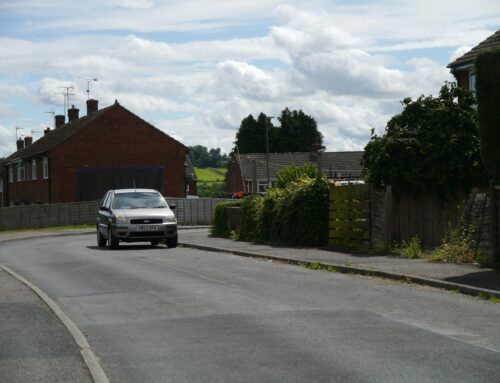
If your development touches the public highway, you are almost certainly going to run into either a Section 278 agreement, a Section 38 agreement, or both.
The problem is that most explanations either bury you in legislation or oversimplify things to the point where they stop being useful. What actually matters is knowing which one applies to your scheme, what it commits you to, and how it affects cost, programme and risk.
Let’s strip it back.
Section 278 is about changing existing highways
A section 278 agreement is used when a developer needs to carry out works on an existing public highway.
That could be:
- A new junction
- Changes to an existing access
- Traffic signals or crossings
- Road widening or lane changes
- Improvements to footways or cycle routes
If the road is already adopted and maintained by the local highway authority, any changes to it will usually require a Section 278 agreement.
You are essentially asking for permission to alter public infrastructure, and the authority needs to be confident that the design, safety and delivery are all handled properly.
This is not optional. If your scheme relies on highway changes to function or to make the planning case stack up, the Section 278 sits alongside your planning permission as a key part of delivery.
Section 38 is about creating new highways
A Section 38 agreement comes into play when you are building new roads that will eventually become part of the public highway.
Typical examples include:
- Roads within residential developments
- New estate roads serving housing or mixed-use schemes
- Internal roads that will be adopted by the authority
Instead of modifying what already exists, you are creating new infrastructure and asking the authority to adopt it once it meets the required standards.
That means the design, materials, drainage, lighting and construction all need to comply with the authority’s specifications from the outset.
If they do not, the road may never be adopted, which can create long-term issues for residents, management companies and lenders.
The difference in one sentence
Section 278 changes existing roads. Section 38 creates new ones that will be adopted.
That distinction sounds simple, but in practice many developments involve both.
A residential site, for example, might need a new priority junction onto an existing road, which falls under Section 278, and a network of internal streets, which fall under Section 38.
Why these agreements matter for planning
Planning permission and highway agreements are closely linked, even though they sit in different processes.
A scheme might be granted planning permission subject to delivering certain highway improvements. Those improvements are then secured and delivered through a Section 278 agreement.
Similarly, if a development includes new roads that are expected to be adopted, the Section 38 agreement provides the mechanism to make that happen.
This is why transport input early on is so important. If highway requirements are not understood at the start, it is easy to end up with a design that works on paper but becomes difficult or expensive to deliver once detailed design and agreements begin. This is often addressed during early planning application support rather than left until post-consent.
What developers often underestimate
The technical requirements are only part of the picture. The real pressure points tend to be time, cost and coordination.
Programme impact
Section 278 and Section 38 agreements can take time to agree. Detailed design, technical approval, legal drafting and sign-off all need to happen before works can proceed or be adopted.
If this is not factored into the programme early, it can delay starts on site or occupation.
Costs and bonds
Both agreements usually involve costs beyond construction.
You may need to cover:
- Design checks and approval fees
- Inspection fees during construction
- Commuted sums for future maintenance
- Legal fees
- Performance bonds or sureties
These can add up quickly, especially for more complex schemes.
Design changes late in the process
If highway requirements are not properly understood early, changes often happen late. That can mean redesigning access points, adjusting layouts, or reworking drainage and levels.
At that stage, changes are more expensive and can ripple through the rest of the project.
Getting the design right early makes everything easier
A lot of the friction around Section 278 and Section 38 agreements comes from trying to retrofit compliant designs after planning has already been secured.
A better approach is to treat highway design as part of the core scheme from the start.
That means:
- Testing access arrangements early
- Understanding visibility, geometry and capacity requirements
- Aligning layouts with adoption standards
- Considering how the site will actually operate once built
This is where transport consultants tend to play a key role. They are not just producing reports. They are helping shape a scheme that can realistically be delivered, not just approved. You can see how that plays out across different types of development in TPA’s project portfolio.
When both agreements apply, coordination is everything
On many schemes, Section 278 and Section 38 agreements run alongside each other.
That creates a coordination challenge.
The external highway works need to tie in with the internal road layout. Levels, drainage, tie-ins and construction sequencing all need to align. If they do not, you can end up with gaps between what is approved and what can actually be built.
It also means different parts of the project may move at different speeds. External works might require separate approvals, contractors or programming, which adds another layer of complexity.
Keeping those strands aligned is often where projects either stay on track or start to drift.
What actually gets these agreements over the line
Highway authorities are looking for one thing above all else, confidence.
They want to know that:
- The design meets their standards
- The works will be delivered safely
- The finished infrastructure will perform as expected
- They are not inheriting future problems
The more clearly your design and supporting information demonstrate that, the smoother the process tends to be.
That is why clear, coordinated submissions matter. Not just technically correct drawings, but a joined-up approach that shows how the scheme works as a whole.
Keep it simple, but do not treat it lightly
Section 278 and Section 38 agreements are not something to panic about, but they are also not something to leave until the last minute.
If your development touches the highway, they are part of the delivery process whether you like it or not.
Get the design right early, understand which agreement applies where, and allow time in your programme for approvals. That removes most of the friction before it has a chance to build.
If you are unsure how these agreements will affect your scheme, it is worth getting advice early. A quick conversation can often flag issues that would otherwise show up much later when they are harder and more expensive to fix.