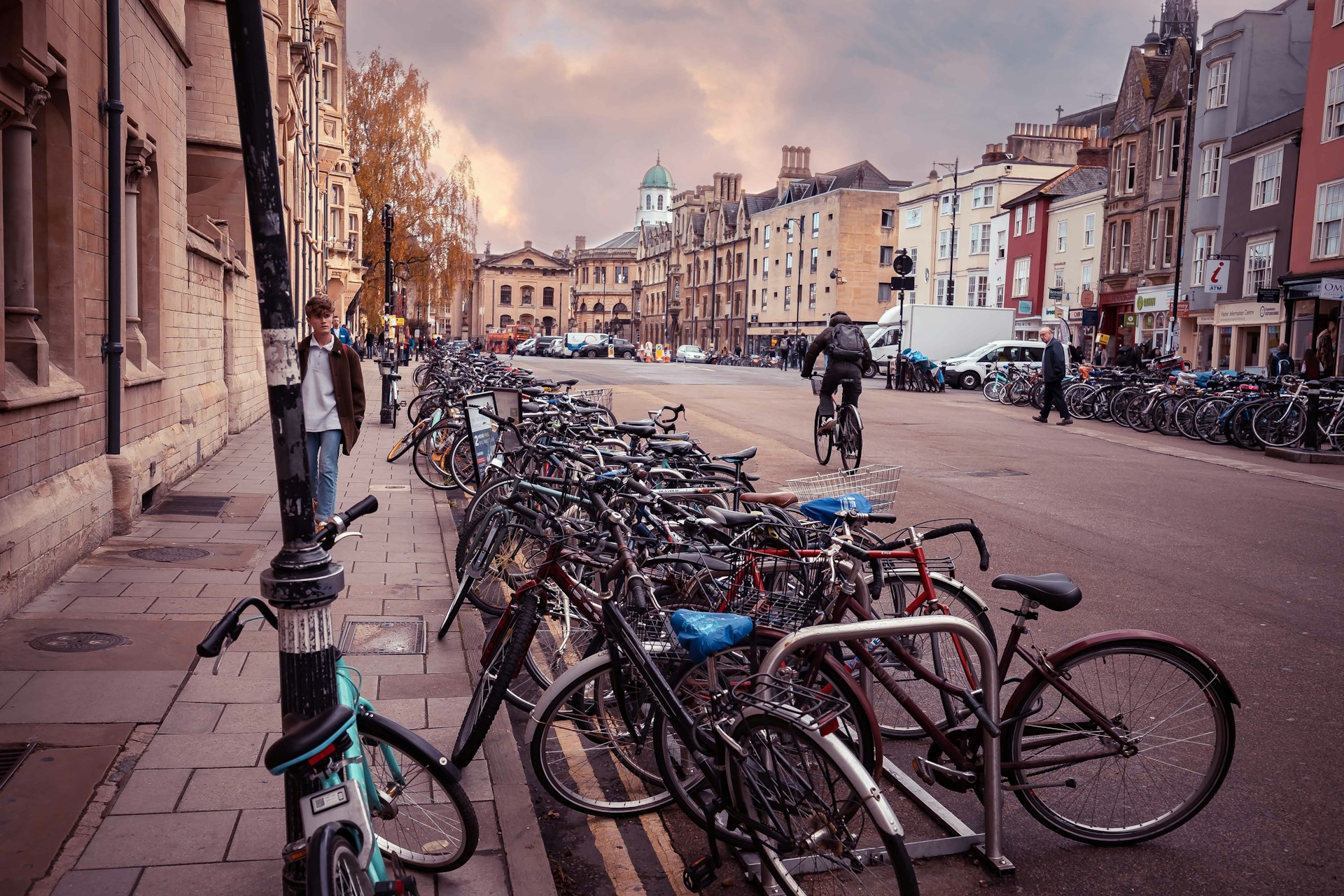
Cycle parking used to be a line in a condition. It is now a design requirement with numbers attached, and schemes get held up over it.
The numbers themselves are rarely the problem. What causes delay is provision that meets the count and fails on everything else, because the standards are about usability rather than quantity.
Long stay and short stay are different products
This distinction sits behind almost every standard and is the one most often collapsed.
Long stay provision is for people leaving a bike for hours. Residents, employees, students. It needs to be secure, covered, and accessible without a struggle. Because the bike is left unattended for long periods, security is the governing requirement.
Short stay provision is for visitors and customers, leaving a bike for minutes. It needs to be close to the entrance, visible, and quick to use. Convenience governs here, and a secure store round the back does not substitute for it.
A scheme providing an excellent secure store and nothing at the front door has met half the requirement. So has one with stands outside and nowhere for residents to leave a bike overnight.
Where the numbers come from
Standards are set locally, and they vary considerably.
Most authorities set minimums per dwelling for residential, per employee or per floor area for commercial, and separate short stay figures for visitors. Some set them by bedroom count rather than by dwelling.
London authorities generally apply the London Plan standards, which are among the more demanding. Elsewhere the local plan or a supplementary planning document sets the figure.
The starting point is always the local standard rather than a general assumption, because a figure that satisfies one authority may be well short in the next borough.
Design details that cause refusals
This is where most schemes come unstuck, and every item is avoidable.
Stand type. Sheffield stands, or similar, allowing the frame and both wheels to be locked to a fixed point. Wheel-only racks that support the wheel without allowing the frame to be secured are generally not accepted and rarely counted.
Spacing. Stands packed too closely cannot be used at full capacity, since a bike either side of each stand needs room. A drawing showing twenty stands in a space that will hold ten usable bikes will be picked up.
Access. A store reached by a flight of stairs, through a narrow door, or via a route requiring the bike to be lifted is provision on paper. Level or ramped access, doors wide enough to wheel a bike through, and adequate turning space are all checked.
Cover and lighting. Long stay provision generally needs to be covered, and any store needs to be lit well enough to be used after dark without feeling unsafe.
Location. A store at the far end of a site, past the bin store, will not be used when the front door is closer.
Accessible and non-standard cycles
An area that has moved quickly and catches schemes designed to older assumptions.
Many authorities now require a proportion of provision suitable for cargo bikes, adapted cycles, tandems and trailers. These need considerably more space than a standard bike and cannot use a conventional two-tier system.
Two-tier racks themselves are worth thinking about carefully. They increase capacity in a given footprint and are unusable for a significant number of people, so authorities often cap how much of the total can be provided that way.
Where it connects to the wider transport case
Cycle parking rarely gets assessed in isolation.
It forms part of the sustainable transport argument in a transport assessment, and it usually appears in the travel plan as a measure being relied on. If the transport case argues that a proportion of trips will be made by bike, the provision has to be capable of supporting that claim.
It also interacts with the site layout. Cycle stores compete for the same ground floor space as bin stores, plant and parking, and resolving that late produces the compromised locations that get objected to. Sorting it at layout stage, alongside swept path analysis and refuse access, avoids the fight.
Practical points worth building in
A few things that make provision work rather than merely comply.
Put short stay stands where people will actually arrive, in sight of the entrance.
Give the long stay store a route from the street that does not involve the car park.
Provide charging where electric bikes are likely, since this is increasingly expected.
Think about who maintains it and who controls access, because a store nobody manages degrades quickly.
Getting it settled early
Cycle parking is a small element that generates a disproportionate amount of correspondence when it is left to the end.
Checking the local standard at the outset, designing the provision into the layout rather than fitting it around what is left, and showing it properly on the drawings resolves most of it before it becomes a query. This is one of the things worth raising during pre-application engagement.
If you have a scheme where sustainable transport provision is likely to be scrutinised, you can reach the team through the London office, the Bristol office, the Cambridge office, the Norwich office or the Welwyn Garden City office.