A Traffic Regulation Order is the legal instrument behind most restrictions on a road, and the traffic regulation order process takes longer than many programmes allow for.
Waiting restrictions, speed limits, one way systems, banned turns, loading bays, parking zones, weight limits. None of them are enforceable without an Order behind them, and none of them can be created by putting up a sign.
For a development, that timing can decide when a scheme is able to open.
What needs one
Anything changing how the public highway may be used.
Introducing or amending waiting restrictions, which is the most common development-related requirement.
Changing a speed limit, whether reducing it through a new frontage or introducing one on a new road.
Banning a turn, introducing a one way system, or changing priority at a junction.
Creating loading bays, disabled bays or residents parking.
Weight, width or height restrictions.
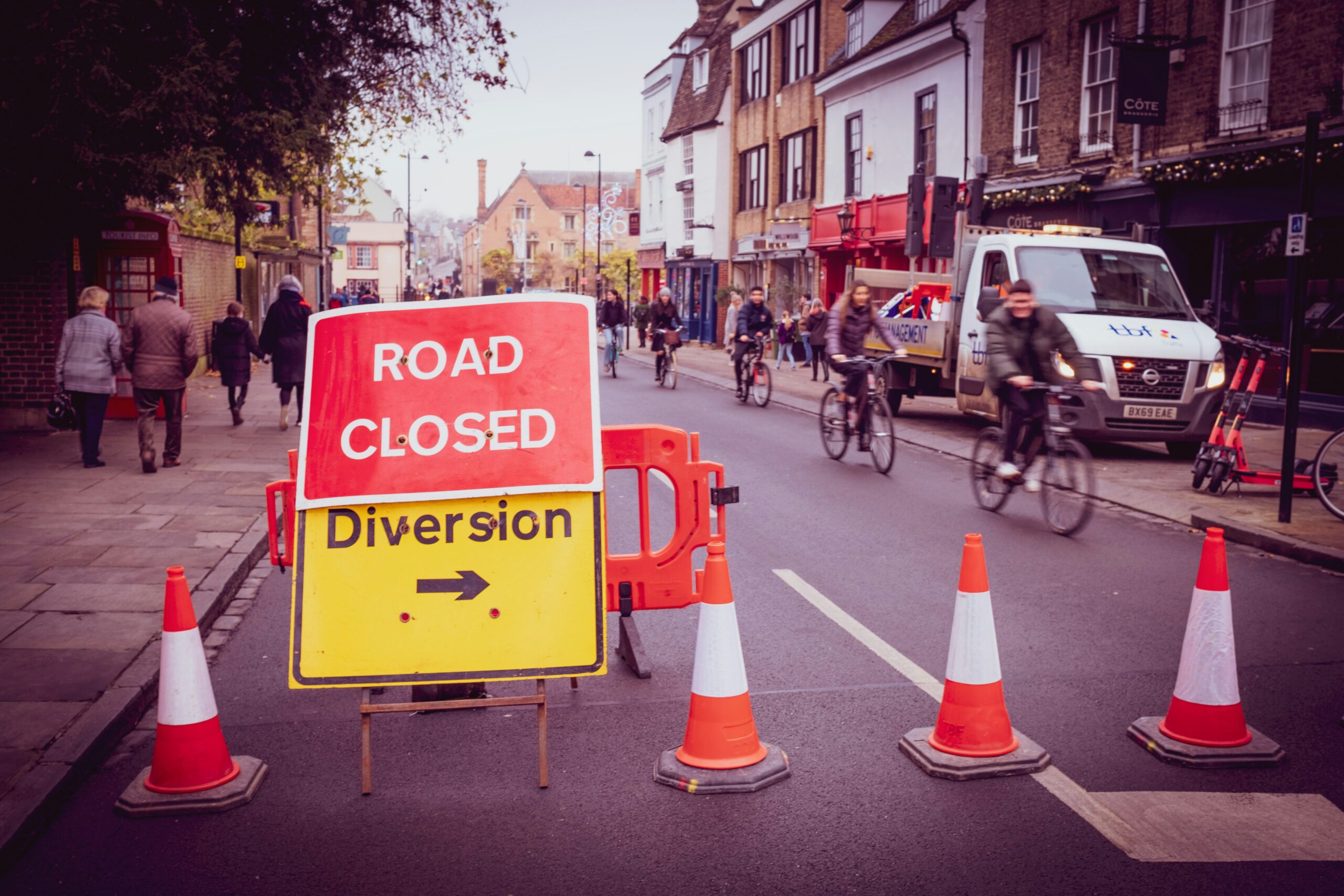
Making a temporary arrangement during construction, which uses a different and shorter route but is still an Order.
The process
It runs in defined stages and each has its own timescale.
The authority prepares the draft Order, having decided the proposal is appropriate. This alone can take time, since it sits in a queue with everything else the traffic team is handling.
The proposal is advertised, in the local press and on street, with a consultation period during which anyone may object.
Consultation runs for a statutory minimum, commonly 21 days, and authorities frequently allow longer.
Objections are considered. Where there are none, the Order can be made. Where there are, the authority has to consider them properly, which may involve a report to committee.
The Order is made and comes into force, and the signs and lines are installed.
There is then a period during which the Order can be challenged in the High Court.
How long it actually takes
The honest answer is longer than the statutory minimums suggest.
A straightforward, uncontested Order might complete in a few months from the point the authority starts work. One attracting objections, or requiring a committee decision, commonly runs to six months or more.
The variables are the authority’s own capacity, whether the proposal is contentious, whether committee time is needed, and how quickly the developer provides what the authority asks for.
Because the process is largely outside the developer’s control once it starts, the useful lever is starting it early rather than pushing it along afterwards.
Why schemes get delayed
The pattern is consistent.
A planning condition requires waiting restrictions to be in place before occupation. Nobody starts the Order until the building is nearly finished. The Order takes five months. Occupation is delayed by four of them.
That sequence is entirely avoidable, and it happens regularly because the Order feels like an administrative step rather than a process with its own timetable.
Where a condition ties occupation to a TRO being in place, start the Order well before occupation approaches. It is part of post-planning delivery, not an afterthought.
Objections
Objections are common, particularly on anything affecting parking.
Residents object to restrictions near their homes. Businesses object to loading arrangements changing. Both are legitimate and both have to be considered.
An objection does not defeat an Order. The authority weighs it and decides. What objections do is add time, and where they are numerous or come from an organised group, they can add a great deal of it.
Consultation before the formal process, so that concerns are understood and where possible addressed in the proposal, tends to reduce objections rather than eliminate them. It is worth doing on anything likely to be contentious.
Who pays
For development-related Orders, the developer usually funds the process.
That covers the authority’s costs in preparing and advertising the Order, the officer time involved, and the installation of signs and lines. The figure is usually recovered through the Section 106 agreement or through a separate arrangement.
It is not a large sum relative to most schemes, and it is one that is regularly left out of early cost planning.
Where it connects to the rest of the works
TROs sit alongside the physical works rather than separate from them.
Where highway works are being delivered under a Section 278 agreement, the Order needs to be in place before the associated restrictions can be enforced. A junction rebuilt with new waiting restrictions is not complete until both have happened.
The design itself will have been through a road safety audit, and audit recommendations occasionally generate a requirement for an Order that was not originally anticipated.
Getting ahead of it
Three things prevent most TRO-related delay.
Identify at design stage every restriction the scheme will require, so nothing surfaces late.
Establish the authority’s typical timescale for Orders, since this varies considerably and local knowledge is the only reliable source.
Start the process as early as the condition allows rather than as late as the programme permits.
If you have a scheme where restrictions are likely to be needed, that is worth mapping before the programme is fixed. You can reach the team through the London office, the Bristol office, the Cambridge office, the Norwich office or the Welwyn Garden City office.