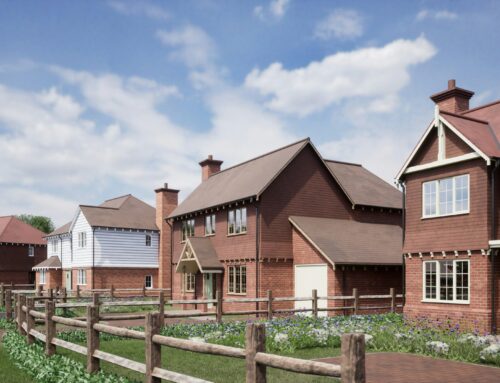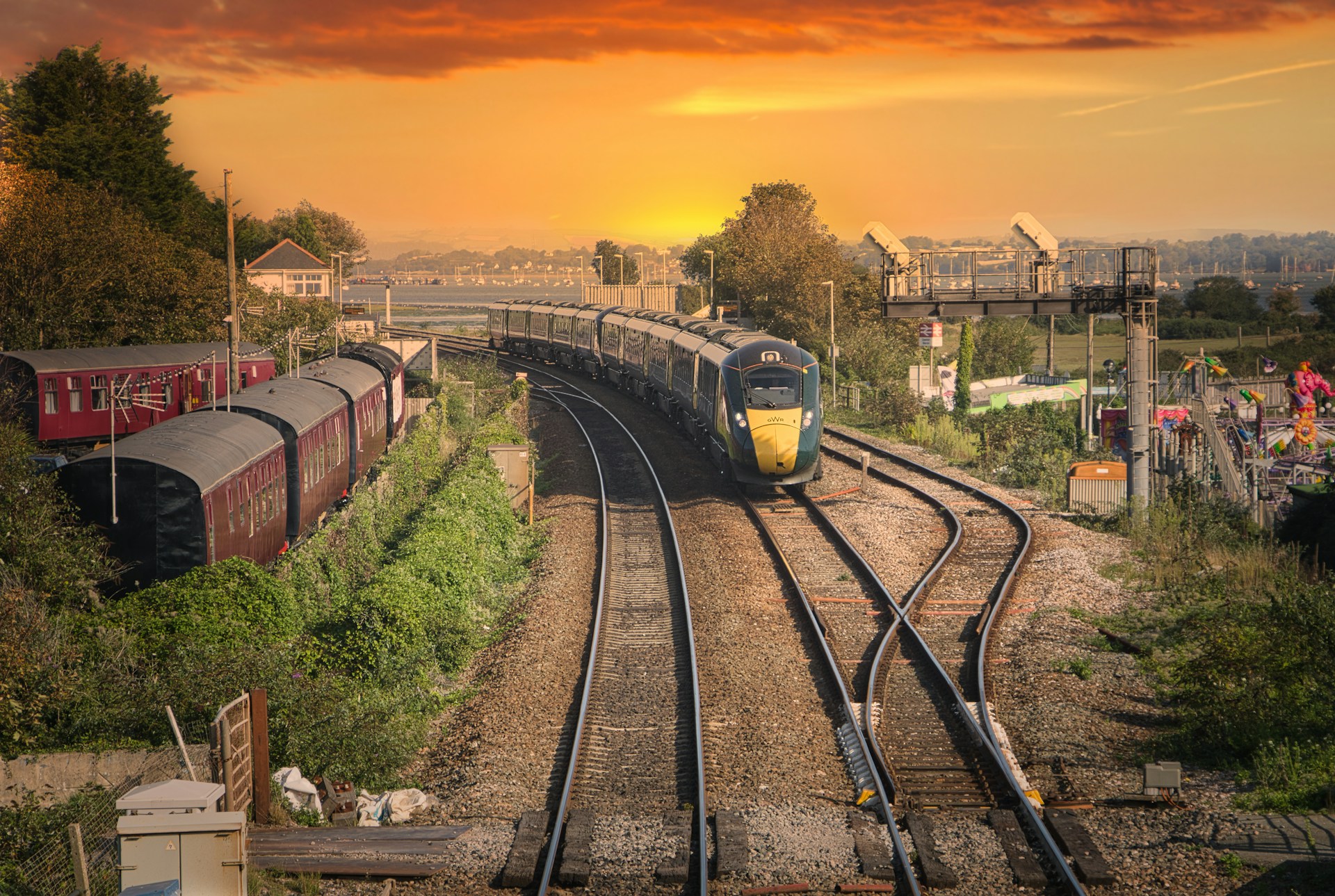
Building homes near railway stations is one of the clearer ideas in current planning policy. Put housing where people can reach jobs and services without a car, and the sustainable travel case looks after itself. The reality is more demanding. A station on the doorstep does not, by itself, deliver sustainable travel patterns, and treating proximity as the whole answer is a common mistake.
The revised framework encourages development around well-connected stations, and the logic is sound. The detail is where schemes succeed or fall short, because a station is only useful if people can reach it safely, change onto it easily, and rely on the services it offers.
What well-connected really means
Proximity is a distance on a map. Connectivity is whether that distance is walkable, wheelable and pleasant, whether the interchange works, and whether the trains and buses actually run when people need them. The Transport Planning Society has made this point directly, warning that station-led development only delivers sustainable travel if it is supported by safe access routes, good interchange, strong public transport connectivity and joined-up transport planning. Distance to the platform is the least of it.
A home three hundred metres from a station, separated from it by a severed footway, a hostile junction or a service that runs twice an hour, is not well connected in any meaningful sense. The residents will drive, and the sustainable case built on the station will not hold up in practice.
The access route is the deciding factor
The walk or wheel to the station is where the theory meets the pavement. If the route is direct, safe, lit and comfortable, people use it. If it involves crossing traffic without provision, doubling back, or feeling unsafe after dark, they do not. Getting this right means treating the access route as a designed element of the scheme, not an afterthought left to whatever the existing network provides.
This is also where inclusivity matters. A route that works for a fit adult in daylight is not the same as one that works for someone with a pushchair, a mobility aid, or a reason to feel unsafe walking alone. The framework’s stronger focus on walking and wheeling only pays off if the routes are designed for everyone who will use them.
Interchange and service quality
Even a good walk fails if the interchange is poor. Long, unclear or exposed transfers between modes put people off. So does an infrequent or unreliable service. A station that offers two trains an hour supports a very different travel pattern from one with a turn-up-and-go frequency, and the honest assessment of a site has to reflect that rather than assume the best case.
Showing it in the transport case
This is where the modelling has to be honest. A residential scheme that assumes a strong shift to rail has to justify it, using the real access quality, the real service level and the real interchange, not an optimistic default. TPA’s work on how transport modelling shapes development decisions sets out why distribution and mode share assumptions get tested hard in review. A station-led case with weak evidence behind the mode shift is one of the easier arguments to challenge.
Designing the connection, not just the location
The stronger schemes treat the station connection as something to design and deliver, not just to point at. That can mean funding a crossing, improving the footway, working with the operator on service provision, or laying out the site so the station is the natural way out rather than the long way round. TPA’s project experience shows how access and layout, worked together from the start, produce a case that stands up rather than one that relies on the map.
The car still needs a plan
A station-led scheme that ignores the car sets itself up to fail. Some residents will still drive some of the time, and pretending otherwise weakens the case rather than strengthening it. The honest position is to plan for the realistic level of car use, manage parking so it supports the sustainable pattern rather than working against it, and show the network can cope with what remains. A scheme that treats the station as a reason to wish the car away tends to be taken apart in review. One that plans for both the sustainable shift and the residual car use is far more credible, and far more likely to survive scrutiny at committee or appeal.
Two questions worth asking early
For any station-side site, two questions settle most of the argument. Can people reach and use the station easily, safely and at the times they need. And can the access and interchange carry the travel pattern the scheme is relying on. Both are easier to answer, and easier to strengthen, with transport input early rather than late. Proximity gets a site into the conversation. Connectivity is what wins it.
If you have a station-side site and want to know whether it stacks up under the new approach, TPA can help. You can get in touch with TPA’s team via the London office, the Bristol office, or the Cambridge office to talk it through.